Table of Contents
- What Is Employee Onboarding?
- Why Employee Onboarding Is Critical in Today’s Recruitment Process
- The Business Impact of Effective Onboarding
- The Modern Employee Onboarding Process: A Complete Framework
- The HR Recruiter’s Role in Successful Onboarding
- Measuring Onboarding Effectiveness
- Technology and the Future of Employee Onboarding
- How AIInterview Helps Improve the Onboarding Journey
- Final Thoughts: Onboarding Is a Promise You Must Keep
The first day decides the first year.
A new hire logs in on Day 1.
No clarity. No roadmap. No human connection.
By Day 30, they’re disengaged.
By Day 90, they’re browsing LinkedIn again.
This is not a hiring problem.
This is an employee onboarding problem.
In today’s competitive recruitment landscape, how you onboard employees matters as much as who you hire. A strong employee onboarding process doesn’t just welcome new hires—it accelerates productivity, builds trust, and improves long-term retention.
In this guide, we break down how to design an effective onboarding experience that works for modern Indian workplaces—practical, scalable, and human.
What Is Employee Onboarding?
Employee onboarding is a structured process of integrating new hires into an organisation—professionally, culturally, and operationally.
It goes far beyond:
- Joining formalities
- Offer letters
- Orientation presentations
A complete employee onboarding process ensures new employees:
- Understand their role and expectations
- Feel confident and supported
- Build early relationships
- Start contributing faster
In short, onboarding is where recruitment converts into performance.
Why Employee Onboarding Is Critical in Today’s Recruitment Process
Let’s be honest—hiring in India is harder than ever.
- High talent competition
- Multiple offers per candidate
- Shorter attention spans
- Remote and hybrid teams
A weak onboarding experience creates early attrition. A strong one builds loyalty.
The Business Impact of Effective Onboarding
An effective employee onboarding experience helps organisations:
- Reduce early-stage attrition
- Improve employee engagement
- Shorten time-to-productivity
- Strengthen employer brand
- Create alignment from Day 1
For HR recruiters, onboarding is no longer an HR task—it’s a business growth lever.
The Modern Employee Onboarding Process: A Complete Framework
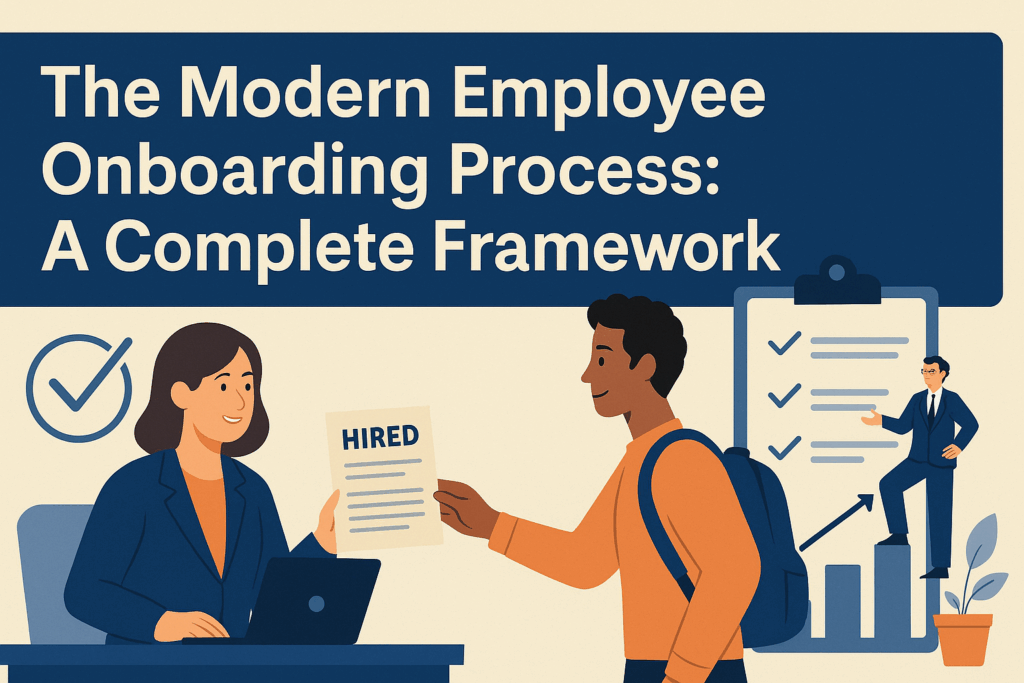
A high-performing onboarding process happens in four strategic phases:
- Pre-Onboarding
- Day One Experience
- Role Enablement (First 30–90 Days)
- Continuous Engagement
Let’s break each one down.
Phase 1: Pre-Onboarding (Before Day One)
The onboarding experience starts the moment an improve candidate Experience accepts the offer.
This phase is often ignored—and that’s a mistake.
What Great Pre-Onboarding Looks Like
- Welcome email from HR recruiter or reporting manager
- Clear joining checklist
- Login credentials and system access
- Team introduction email
- First-week agenda
This builds excitement and reduces anxiety.
Why Pre-Onboarding Matters
- Prevents candidate drop-off
- Builds early emotional connection
- Signals professionalism
- Creates confidence before joining
A silent gap between offer and joining date is a red flag.
Phase 2: Day One Onboarding Experience
Day One should answer one simple question for every new employee:
“Did I make the right decision?”
What New Employees Expect on Day One
- Warm welcome
- Clear agenda
- Introductions to people, not just policies
- Clarity on role and expectations
Best Practices for Day One Onboarding
- Start with purpose, not paperwork
- Share company vision, values, and culture
- Introduce leadership (even via video)
- Explain how their role contributes to business goals
Remember: People don’t join companies. They join leaders, teams, and purpose.
Phase 3: Role-Based Onboarding (First 30–90 Days)
This is where onboarding either succeeds or fails.
Common Onboarding Mistakes
- Overloading new hires with information
- No structured learning plan
- Unclear performance expectations
- Minimal manager involvement
What an Effective Role Onboarding Program Includes
- Clear 30-60-90 day goals
- Defined success metrics
- Access to learning resources
- Regular manager check-ins
- Buddy or mentor support
This phase transforms onboarding from orientation to enablement.
The Role of Managers in the Onboarding Process
HR can design the onboarding program.
But managers make it work.
What Managers Must Own
- Role clarity
- Performance expectations
- Feedback and coaching
- Team integration
Employees don’t leave companies—they leave managers.
The same applies to onboarding success.
Phase 4: Continuous Onboarding & Engagement
Onboarding does not end after the first week—or even the first month.
Modern onboarding is continuous.
How to Extend the Onboarding Experience
- Regular feedback loops
- Learning and skill development plans
- Career path visibility
- Performance conversations
- Recognition and inclusion
This builds long-term engagement and reduces silent disengagement.
Designing High-Impact Onboarding Programs
No two roles are the same.
Your onboarding programs shouldn’t be either.
Customise Onboarding By:
- Role (technical, sales, leadership)
- Experience level (fresher vs experienced)
- Location (remote, hybrid, on-site)
Personalisation improves relevance and retention.
Employee Onboarding Experience
Process matters.
But experience matters more.
A great employee onboarding experience makes people feel:
- Valued
- Prepared
- Supported
- Confident
Small things make a big difference:
- A welcome note from the CEO
- A mentor who actually checks in
- Clear answers instead of assumptions
Onboarding is emotional before it is operational.
The HR Recruiter’s Role in Successful Onboarding
For HR recruiters, onboarding is the final step of the recruitment process.
Smart HR Teams Focus On:
- Seamless handoff from hiring to onboarding
- Candidate-to-employee experience continuity
- Early engagement metrics
- Feedback-driven improvement
Recruitment success is incomplete without onboarding success.
Measuring Onboarding Effectiveness
If you don’t measure onboarding, you can’t improve it.
Key Onboarding Metrics to Track
- Time to productivity
- Early attrition rate
- New hire engagement scores
- Manager feedback
- Employee satisfaction surveys
Data-driven onboarding leads to predictable outcomes.
Technology and the Future of Employee Onboarding
Modern onboarding requires modern tools.
Digital onboarding platforms help:
- Automate workflows
- Track progress
- Standardise experiences
- Personalise learning
AI-driven tools—like AI-powered interviews, assessments, and feedback systems—are transforming how organisations hire and onboard at scale.
How AIInterview Helps Improve the Onboarding Journey
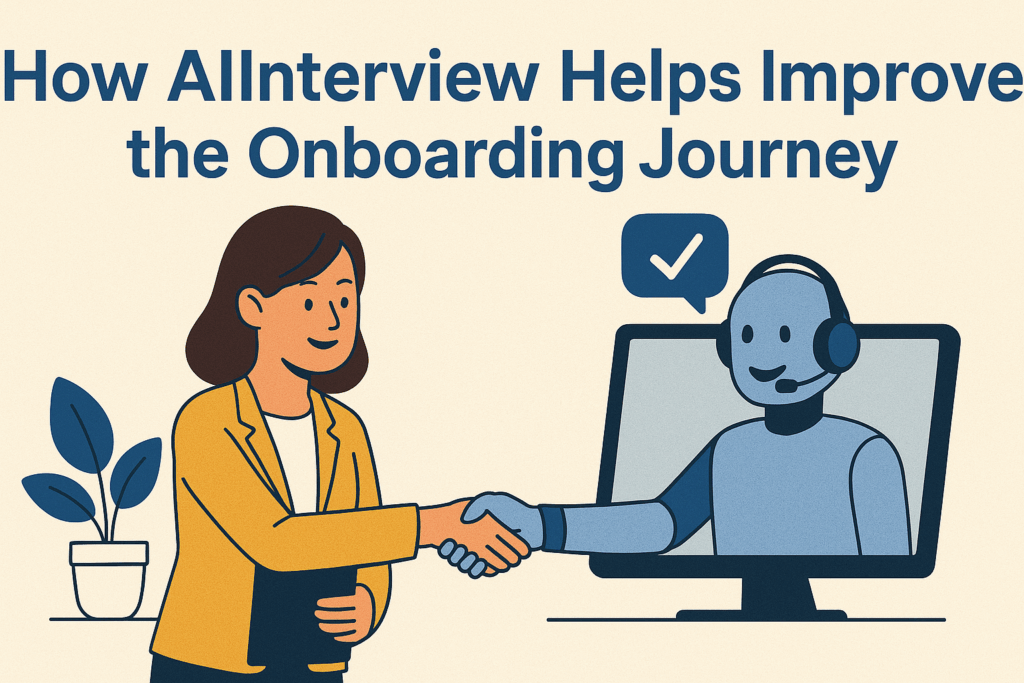
At AIInterview, we believe onboarding starts even before Day One.
Our AI-driven recruitment and assessment solutions help organisations:
- Hire the right candidates faster with Top Recruitment Strategies
- Reduce hiring bias
- Improve role fit accuracy
- Create smoother transitions from recruitment to onboarding
Better hiring leads to better onboarding.
Better onboarding leads to better performance.
Final Thoughts: Onboarding Is a Promise You Must Keep
Every offer letter is a promise.
Every onboarding experience either fulfils it or breaks it.
A strong employee onboarding process is not optional anymore.
It’s a competitive advantage.
Build onboarding that is:
- Structured
- Human
- Role-driven
- Data-backed
Because great employees don’t just need to be hired.
They need to be set up to succeed.
Want to build stronger teams from Day One?
Start with smarter hiring and seamless onboarding.
👉 Explore AI-powered recruitment and assessment solutions at AIInterview.in (HR automation software)