Table of Contents
- Why resume screening matters today
- What is AI resume screening?
- How AI resume screening actually works — step-by-step
- Benefits for HR teams
- Common pitfalls & limitations
- Best practices for implementation
- Impact on candidate engagement — how to keep applicants informed
- Case study: Indian mid-sized IT services firm
- Quick comparison: AI vs traditional vs hybrid screening
- Pricing & ROI considerations
- Recommended next steps for HR teams
- FAQs
Hiring in India has changed—fast. Volumes are higher, skill requirements are tighter, and candidate patience is lower than ever. If you still rely on manual resume screening, you’re losing time, talent, and credibility.
In this guide, you’ll learn how AI resume screening software actually works, why HR teams are adopting it, where it can fail, and how to implement it correctly—without hurting candidate experience or compliance.
Why resume screening matters today
Resume screening is no longer a simple filtering task—it’s a strategic bottleneck.
According to Experts, the average corporate role attracts 250+ resumes, but only 4–6 candidates reach the interview stage. In India, hiring volumes are often higher due to fresher pipelines, campus drives, and lateral movement.
Key challenges HR teams face today:
- Resume overload leads to rushed decisions
- Manual bias creeps in under pressure
- Delays frustrate candidates and hiring managers
- Good candidates drop off due to slow response times
Gartner reports that recruiters spend up to 40% of their time screening resumes—time that could be used for interviews and stakeholder alignment (source: Gartner).
This is why resume screening software has become essential, not optional.
What is AI resume screening?
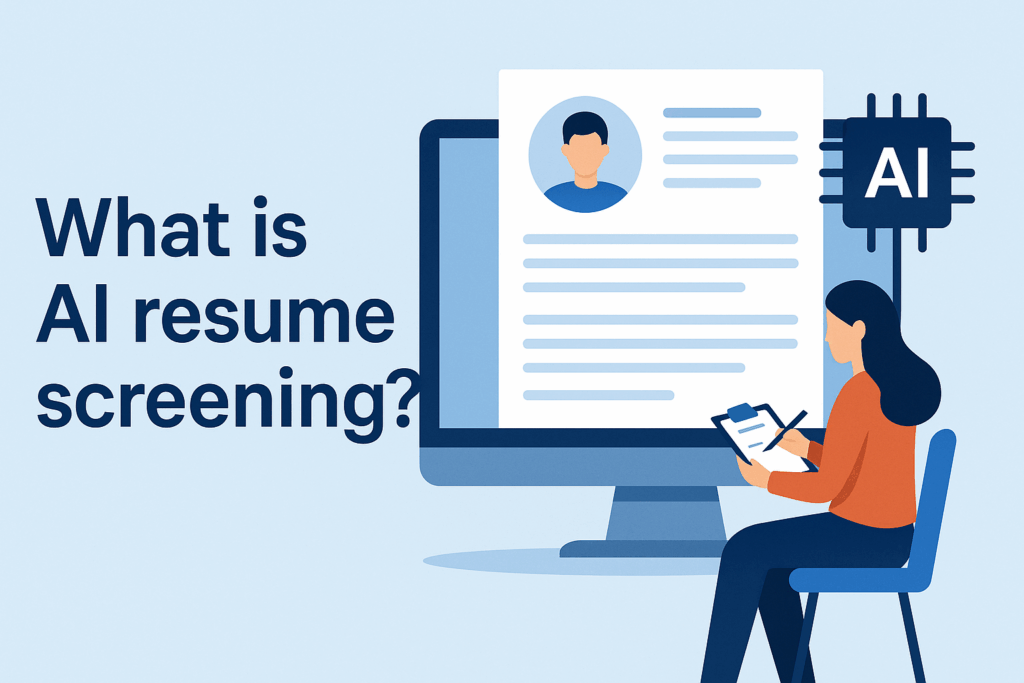
AI resume screening is the use of machine learning (ML) and natural language processing (NLP) to automatically read, evaluate, and rank resumes based on job requirements.
In plain terms:
A resume screening tool acts like a fast, tireless recruiter—reading thousands of resumes in minutes and surfacing the best matches.
Instead of keyword matching alone, modern systems understand:
- Skills in context
- Job relevance, not just titles
- Experience depth, not just duration
That’s a big shift from traditional screening.
Key components
Resume parsing
Breaks resumes (PDF, DOCX, scanned) into structured data like skills, experience, and education.
Scoring
Assigns relevance scores based on job criteria.
Ranking
Orders candidates from best-fit to least-fit.
NLP (Natural Language Processing)
Helps the system understand synonyms, context, and intent (e.g., “software testing” ≈ “QA”).
Machine learning
Improves accuracy over time based on hiring outcomes and recruiter feedback.
How AI resume screening actually works — step-by-step
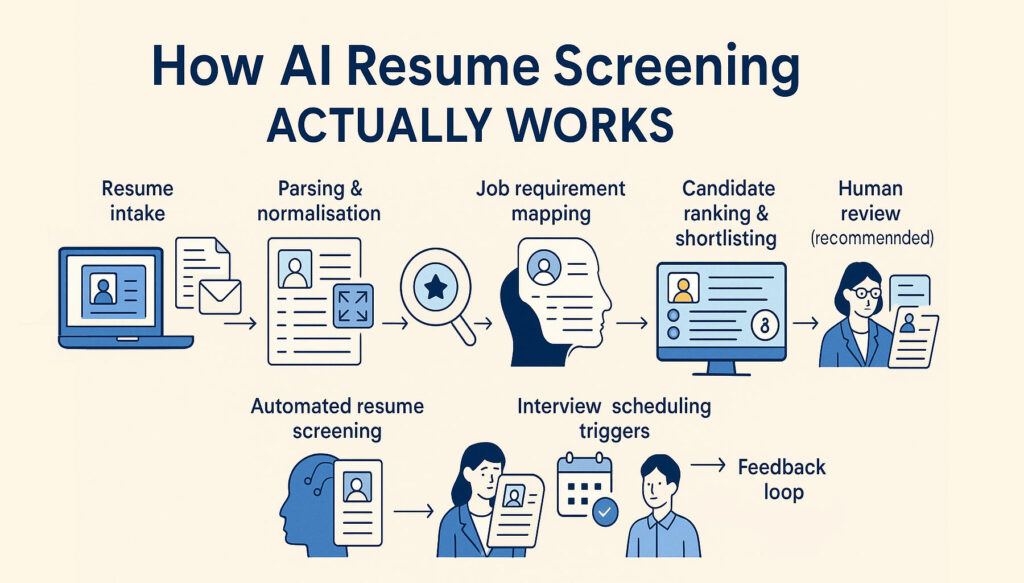
AI resume screening works best when HR teams understand what happens behind the scenes. It’s not a black box. It’s a structured workflow that combines technology, logic, and human judgment. Here’s how most modern resume screening software works in real hiring environments.
1. Resume intake
The process starts the moment candidates apply for a role. Resumes usually come in through multiple channels—company career pages, job portals, email applications, or directly from an ATS.
AI resume screening software is designed to collect resumes from all these sources into one central system. This avoids duplicate profiles and ensures no application is missed.
For HR teams hiring at scale, this step alone saves hours of manual downloading, sorting, and uploading.
From a hiring context, this is the foundation of automated resume screening—high volume, zero chaos.
2. Parsing & normalization
Once resumes are collected, the system reads them using resume parsing technology.
Resume parsing means converting unstructured resumes (PDFs, Word files, scanned documents) into structured data. The AI in hiring extracts:
- Skills
- Job titles
- Years of experience
- Education
- Certifications
Normalization then comes into play. Different candidates write the same skill differently—“JS”, “JavaScript”, “Frontend JS”. AI standardizes these into a common skill library, improving accuracy.
This step ensures fair resume screening by focusing on content rather than formatting quality.
3. Job requirement mapping
Next, the job description (JD) is analyzed. The resume screening tool breaks the JD into clear categories:
- Must-have skills (non-negotiable)
- Good-to-have skills (preferred but optional)
- Experience range
- Location, industry, or role-specific criteria
This structured mapping is critical. Poor JD mapping is one of the biggest reasons resume screening fails.
When done right, AI understands what really matters for the role—far better than simple keyword matching.
4. Automated resume screening
This is where AI resume screening truly begins.
Each resume is compared against the mapped JD using machine learning and NLP models. The system checks:
- Skill relevance and depth
- Experience alignment
- Career progression consistency
- Role similarity
Instead of just matching words, the AI evaluates context. For example, it understands that a “Backend Engineer” with Python experience may still fit a “Software Engineer” role.
Every resume receives a relevance score—clear, consistent, and unbiased.
5. Candidate ranking & shortlisting
After scoring, candidates are automatically ranked from best fit to least fit.
Recruiters see:
- Match percentage
- Key strengths
- Skill gaps
- Role alignment explanations
This transparency is important. Modern HR teams don’t want “AI says so.” They want to know why a candidate is shortlisted.
This step dramatically improves resume screening efficiency and helps hiring managers trust the system.
6. Human review (recommended)
AI resume screening works best with a human-in-the-loop approach.
Recruiters review the top-ranked profiles, validate recommendations, and make final shortlist decisions. This maintains:
- Fairness
- Contextual judgement
- Compliance with hiring policies
In Indian hiring environments—where career paths are diverse—human review ensures genuine talent isn’t missed.
7. Interview scheduling triggers
Once shortlisted, candidates automatically move to the next stage.
The system can:
- Trigger interview invites
- Sync with calendars
- Integrate with interview scheduling tools
- Update ATS status
This reduces delays and improves candidate engagement. Faster responses signal professionalism and respect—something today’s candidates expect.
8. Feedback loop
The final and most important step is learning.
Hiring outcomes—who performed well, who was hired, who dropped off—are fed back into the system. Over time, the AI learns:
- Which profiles succeed in interviews
- Which skills predict performance
- Which criteria need tuning
This feedback loop ensures resume screening accuracy improves with every hiring cycle.
Why this hybrid approach works
AI handles speed, scale, and consistency.
Humans provide judgment, empathy, and context.
Together, they create a resume screening process that is faster, fairer, and more effective—exactly what HR teams in India need today.
Benefits for HR teams
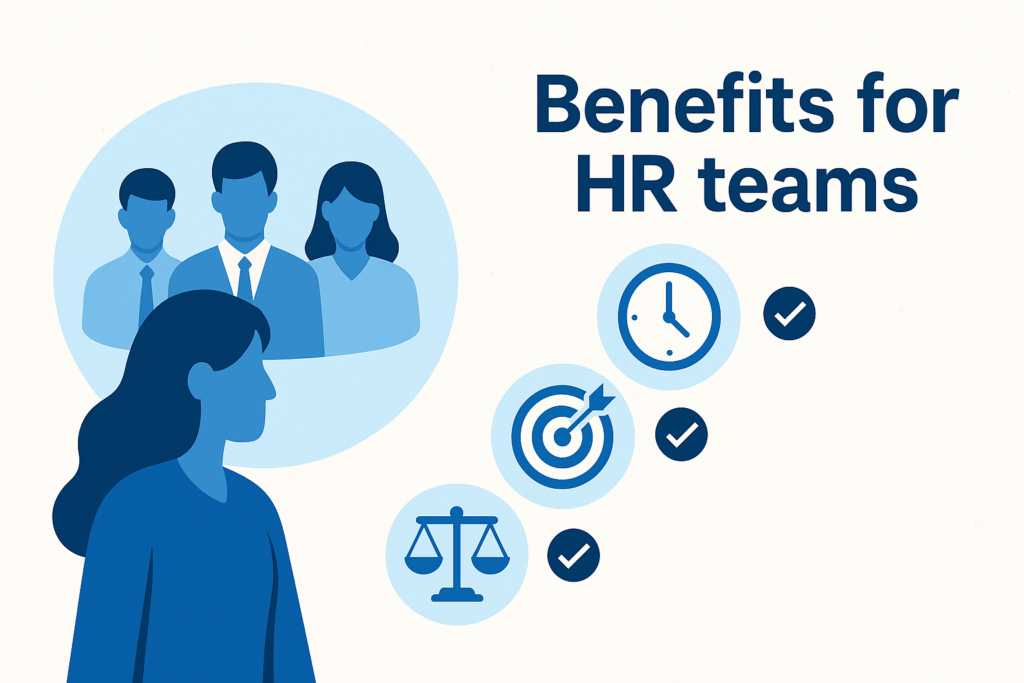
1. Faster time-to-hire
Teams report 50–70% reduction in screening time.
2. Better quality shortlists
AI evaluates consistently, reducing noise from irrelevant resumes.
3. Reduced unconscious bias
When trained correctly and monitored, AI focuses on skills—not names or pedigree.
4. Improved candidate engagement
Faster responses = higher application completion and acceptance rates.
Common pitfalls & limitations
AI resume screening isn’t magic. Problems arise when teams misuse it.
Bias risk:
If historical data is biased, models can repeat it.
False positives:
Keyword-heavy resumes can look good but fail interviews.
Compliance concerns:
GDPR, India IT Act, and upcoming DPDP Act require transparency.
Candidate experience damage:
Silent rejection or unexplained automation erodes trust.
Best practices for implementation
Checklist for choosing a vendor
- Indian JD & talent dataset support
- ATS integration
- Bias audit capability
- Explainable scoring (why shortlisted)
- Human-in-the-loop workflows
Metrics to track
- Precision & recall of shortlisted candidates
- Time-to-hire
- Interview-to-offer ratio
- Candidate response rates
- Drop-off after screening
Impact on candidate engagement — how to keep applicants informed
Candidate engagement doesn’t end at application.
Best practices:
- Auto-confirm receipt of application
- Share screening timelines
- Send polite rejection updates
- Offer feedback where feasible
Transparent automation builds trust.
Case study: Indian mid-sized IT services firm
Company size: 600 employees
Problem: 1,200 resumes/month, 14-day screening cycle
Solution:
Implemented AI resume screening + human validation.
Results (90 days):
- Screening time cut by 62%
- Interview-quality candidates up by 28%
- Candidate response rate increased from 41% to 67%
Quick comparison: AI vs traditional vs hybrid screening
| Approach | Speed | Accuracy | Bias risk | Candidate experience | Cost |
| Manual | Slow | Inconsistent | High | Low | High |
| AI-only | Very fast | Medium | Medium | Medium | Low |
| Hybrid (AI + HR) | Fast | High | Low | High | Optimised |
Pricing & ROI considerations
Most resume screening software is priced per:
- Recruiter seat
- Resume volume
- Hiring pipeline size
To calculate ROI:
- Hours saved × recruiter cost
- Reduced agency spend
- Faster business productivity
ROI usually becomes visible within 3–6 months.
Recommended next steps for HR teams
AI resume screening is no longer about efficiency alone—it’s about hiring credibility.
If you implement it with transparency, human oversight, and strong candidate communication, you’ll hire faster and build trust.
Next steps:
- Audit your current screening time
- Pilot a hybrid screening workflow
- Track quality, not just speed
Ready to screen better, not just faster?
Book a demo with AIInterview.in (affordable ai recruiting tools) to see skill-first, bias-aware resume screening in action.
FAQs
What does resume screening mean?
It means evaluating resumes to identify candidates worth interviewing.
Is AI resume screening legal in India?
Yes, if transparent and compliant with data protection norms.
Will AI reject good candidates?
Only if poorly configured. Human oversight solves this.
Can it integrate with my ATS?
Most modern tools support ATS integration.
Does it hurt candidate experience?
Not if communication is clear and timely.
Is it suitable for niche roles?
Yes—with proper JD tuning and feedback loops.