Table of Contents
- The real cost of a wrong hire (and why you can’t ignore it)
- Why a clear recruitment strategy matters
- Core recruitment strategies every Indian HR team should use
- Recruiting B2B channel partners — best strategies
- Practical hiring toolkit
- Case study: How an Indian SaaS company improved hiring
- Measurement and continuous improvement
- Conclusion: Start hiring better this month
- FAQs
The real cost of a wrong hire (and why you can’t ignore it)
Picture this.
A sales manager looks perfect on paper. Great English, big-brand experience, confident in the interview. You convince the CEO, push the offer, and onboard them with full enthusiasm.
Three months later:
- Revenue hasn’t moved
- The team complains about their attitude
- You realise numbers were “decorated” in their CV
Now you’re reopening the role, rebuilding the pipeline, and explaining to management what went wrong.
Studies show a bad hire can cost up to 30% of the employee’s first-year salary — sometimes even up to 5x when you include lost productivity, mistakes, and morale damage.
In India’s competitive market, especially for tech and digital roles, there’s no space for guesswork.
This guide is for you if:
- You’re an HR recruiter tired of inconsistent hiring
- You’re a CEO or founder who wants better hires
- You want recruitment strategies that actually work — starting this month
Let’s cut the noise and get into simple, practical hiring and recruiting strategies tailored for Indian workplaces.
Why a clear recruitment strategy matters
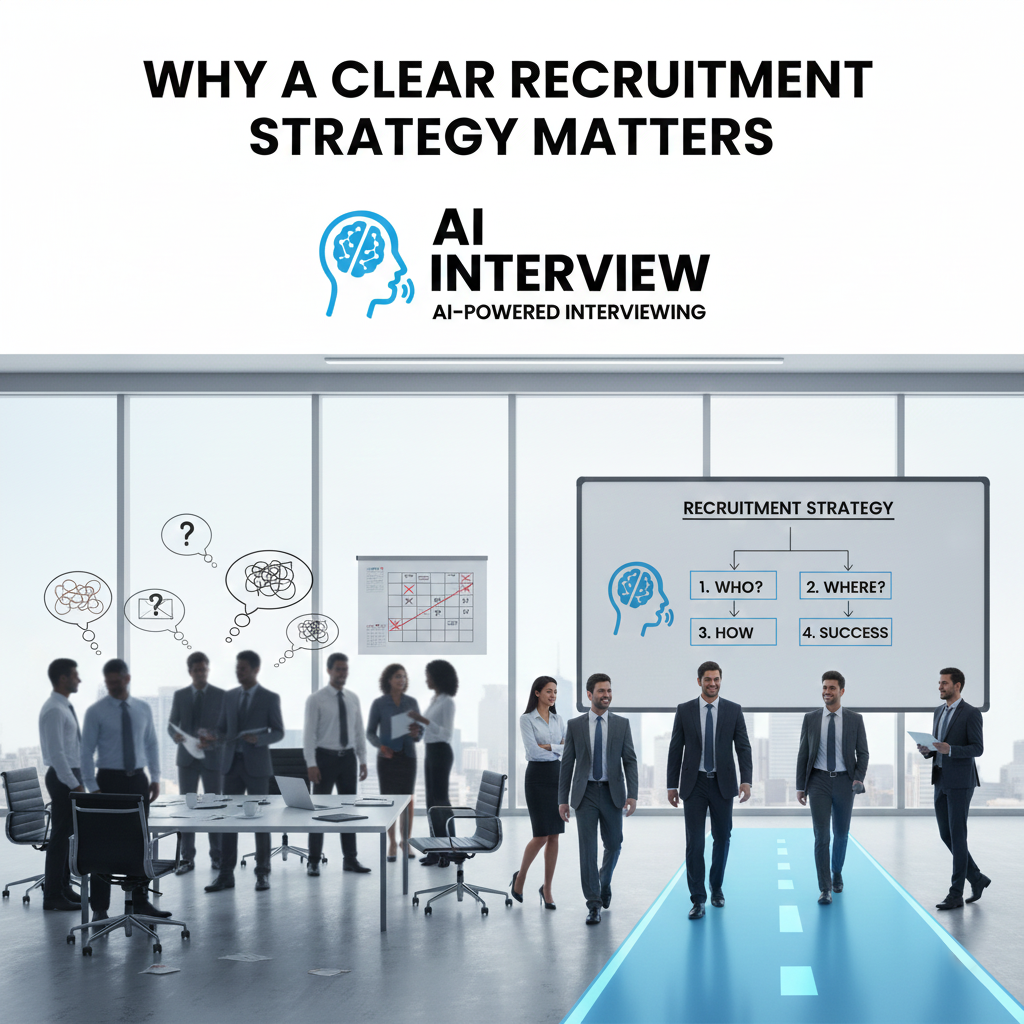
Most HR teams have interviews. Few have a recruitment strategy.
A recruitment strategy answers four questions:
- Who do we want to hire?
- Where will we find them?
- How will we evaluate them?
- How will we measure success?
The right strategy improves KPIs like:
- Time-to-hire
- Cost-per-hire
- Quality-of-hire
- Source effectiveness
Better metrics = better business results.
Every strong hire speeds up growth. Every wrong hire slows it down.
Core recruitment strategies every Indian HR team should use
Recruitment in India is changing fast. Candidates have more options, notice periods are long, and skills are evolving every year. To hire better consistently, HR teams need structured, proactive, and data-driven approaches. Below are the core strategies that truly move the needle.
1. Build a strong employer brand and recruitment marketing strategy
Before candidates apply, they check your online presence. A strong employer brand attracts better talent even before you post a job. It builds trust, reduces hiring cost, and increases offer acceptance rates.
Quick wins:
- Update your LinkedIn Company Page
- Add employee stories, reels, behind-the-scenes moments
- Respond politely on Glassdoor (shows maturity)
- Share blogs about work culture, customer wins, learning programmes
- Feature leaders in posts and videos
A Pune-based mid-size IT firm posted one employee story per week. In three months, organic applications rose by 40%.
That’s recruitment marketing in action.
2. Create and maintain a talent pipeline
A talent pipeline ensures you’re never starting from zero when a role opens. This reduces hiring delays and protects business continuity.
Build talent pipelines by:
- Identifying evergreen roles
- Tagging promising candidates (good fit, future fit, culture fit)
- Adding them to a simple spreadsheet or ATS
- Sending light-touch updates every 60–90 days
outreach template:
“Hi <Name>,
I came across your profile while checking for strong <role> talent. Your work in <skill/project> stood out.
We’ll be hiring for similar roles soon — would you be open to a quick chat this week or next?”
Simple. Human. Works.
3. Use structured hiring and continuous hiring process improvement
Structured hiring removes guesswork and eliminates bias. It ensures every candidate is evaluated fairly and consistently.
Use:
- Job briefs (business impact, must-haves, success metrics)
- Interview scorecards (same criteria for all candidates)
- Standard interview rounds:
- HR screen
- Hiring manager technical round
- Case study / skill test
- Culture fit
- HR screen
Every 5–6 hires, review your process:
Where are delays happening? Which stages don’t add value? Which interviewers give inconsistent feedback?
This is hiring process improvement.
4. Data-driven sourcing & tracking
Good hiring depends on data, not assumptions. Even without an ATS, you can track the patterns that matter.
Track:
- Where each candidate came from
- Where final hires came from
- Offer acceptance rate
- Time-to-hire by role
- 90-day retention by channel
You’ll quickly learn:
- “Our best sales hires come from referrals.”
- “Tech hires from this job board leave within 6 months.”
Double down on what works.
5. Use assessments and structured interviews to hire better
Talking well doesn’t always mean working well. Assessments give you real proof of capability.
Use:
- Skills tests
- Work-sample tasks
- Case questions
- Scenario-based evaluations
- Tools like AIInterview.in to standardise evaluations
This reduces bias and improves quality-of-hire.
6. Employee referrals and internal mobility
Referrals bring high-quality, high-retention candidates. Internal mobility creates loyalty and reduces attrition.
Make referrals work:
- Offer meaningful referral rewards
- Share open roles regularly
- Acknowledge referrers in townhalls
Internal mobility examples:
- Support → Customer Success
- Junior Developer → QA
- Sales → Account Management
Internal growth strengthens culture.
7. Recruitment marketing and social recruiting
Modern recruiting blends HR and marketing. Candidates trust companies that share real stories and culture online.
Ideas:
- Role-based landing pages
- Short Instagram reels (“Day in the Life”)
- Paid LinkedIn ads for niche roles
- Sharing openings via WhatsApp groups, alumni groups, Telegram tech communities
Even a simple founder video saying “Here’s why this role matters” attracts serious talent.
8. Diversity & inclusion as a hiring advantage
Diversity improves decision-making and drives innovation. You don’t need a massive programme — small steps make a big difference.
Start with:
- Gender-neutral JDs
- Considering tier-2/3 candidates
- Welcoming career-break profiles
- Reducing bias (college, accent, background)
Diverse teams reflect your customers better.
9. Faster offers and better candidate experience
Candidates drop off when communication is slow. A smooth candidate experience increases offer acceptance dramatically.
Improve CX by:
- Sharing the hiring process upfront
- Giving feedback within 24–48 hours
- Using templates for updates
- Keeping communication warm and timely
Most candidates reject offers due to silence, not salary.
Recruiting B2B channel partners — best strategies

Channel partners are crucial for scaling across regions and industries in India. A clear strategy ensures you pick partners who bring value, not noise.
1. Define the ideal partner profile
Focus on:
- Geography
- Customer base
- Sales capability
- Complementary product portfolio
- Reputation
2. Direct outreach + warm networks
B2B partnerships work best when there’s trust.
Use:
- LinkedIn
- Industry events
- Trade associations
- Mutual introductions
Sample outreach:
“We’re onboarding select partners in <region> for <solution>.
Would you be open to a short discussion?”
3. Strong co-marketing support
Partners love brands that enable their success.
Offer:
- Clear margins
- Simple payouts
- Marketing kits
- Joint webinars
- Regional roadshows
4. Partner scorecard
Rate each partner on:
- Market reach
- Sales strength
- Reputation
- Product alignment
- Willingness to invest in training
Choose partners who score consistently high.
Practical hiring toolkit
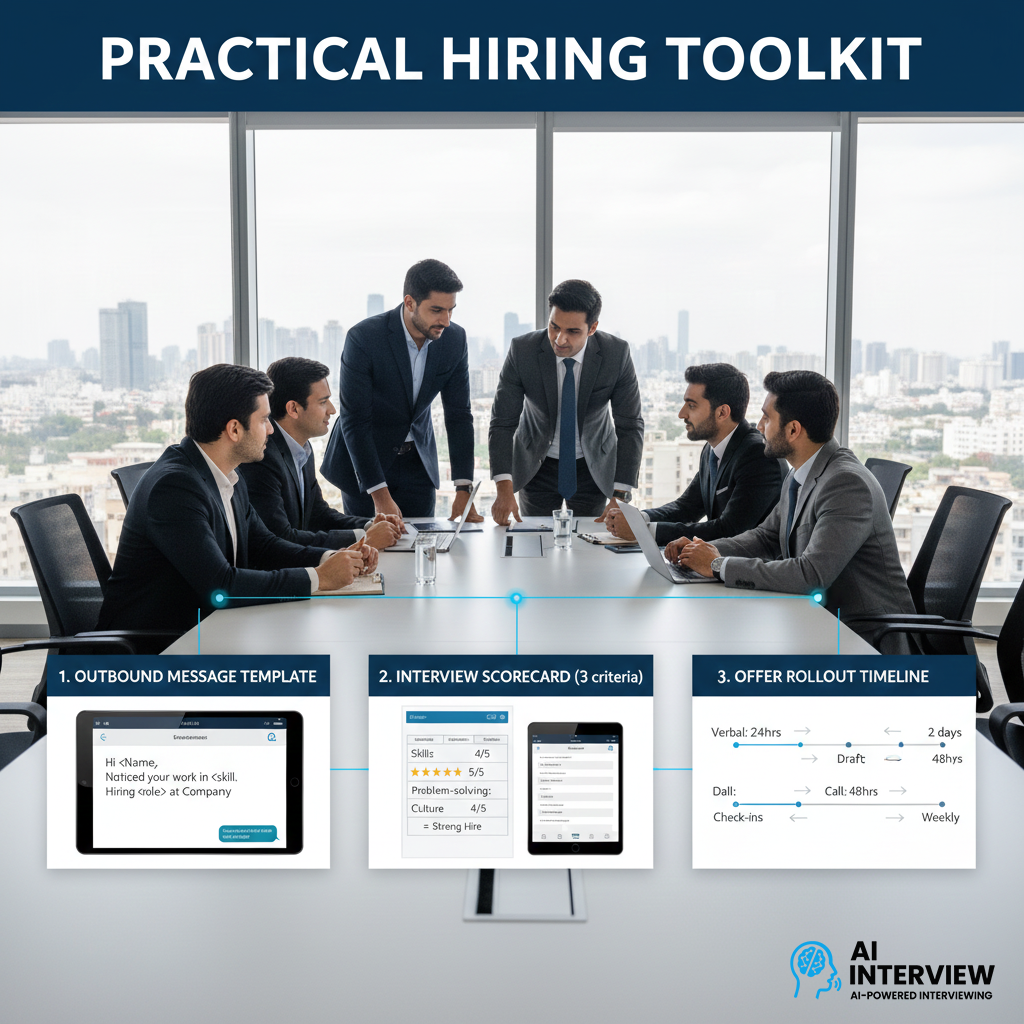
Simple tools that make hiring faster and more consistent.
1. Outbound message template
“Hi <Name>,
I noticed your work in <skill/project> and wanted to connect.
We’re hiring <role> at <Company>.
Your background looked relevant.
Would you be open to a short conversation this week?”
2. Interview scorecard (3 criteria)
Score 1–5 for each:
- Role-specific skills
- Problem-solving & ownership
- Culture & communication fit
Example: 12/15 = Strong hire.
3. Offer rollout timeline
- Verbal confirmation within 24 hours
- Draft offer within 2 days
- Clarification call within 48 hours
- Weekly check-ins till joining
Fast offers = higher acceptance.
Case study: How an Indian SaaS company improved hiring
This real-world example shows how structured hiring can transform results.
A Bengaluru SaaS company (250 employees) struggled with:
- 60–70 day time-to-hire
- High early attrition
- Inconsistent interviews
They made three changes:
- Employer branding — LinkedIn videos, real job previews
- Structured interviews — scorecards + AIInterview.in
- Quarterly data reviews — channel performance
Results in 9 months:
- Time-to-hire reduced by 38%
- Sales attrition dropped from 32% → 18%
- 68% of reps hit quota (previously 45%)
Hiring improved → revenue improved.
Measurement and continuous improvement
Great hiring needs regular tuning. Monthly review = stronger outcomes.
Track:
- Time-to-hire
- Cost-per-hire
- Offer acceptance
- Quality-of-hire
- Candidate experience
A/B test:
- JDs (short vs long)
- Outreach subject lines
- Interview sequences
- Social recruiting posts
Treat hiring like product development — iterate and improve.
Conclusion: Start hiring better this month
Hiring doesn’t have to feel unpredictable.
With structured recruitment strategies, strong employer branding, better assessments, and continuous analytics, you’ll consistently find the right candidates — not just the most available ones.
If you want to speed up screening, shortlist smarter, and improve interview quality, explore AIInterview.in.
FAQs
1. What are the best strategies for recruiting B2B channel partners?
Define ideal partner profiles, use warm introductions and LinkedIn outreach, offer clear margins and co-marketing support, and score partners using a simple evaluation matrix.
2. How can HR improve time-to-hire?
Simplify interview stages, use structured screening, keep communication fast, pre-align salary bands, and use AI-based interview tools to automate early rounds.
3. What are effective hiring methods for tech roles?
Use coding tests, pair programming, scenario questions, and short take-home tasks. Combine referrals, niche communities, job boards, and strong employer branding.
4. How do you measure quality-of-hire?
Use performance ratings, time-to-productivity, retention at 6–12 months, and manager feedback. Combine these into a single score to compare across roles and channels.
5. How do I build a recruitment marketing strategy on a small budget?
Focus on organic LinkedIn content, employee stories, WhatsApp groups, and a clear careers page. Repurpose one story across multiple channels for maximum visibility.